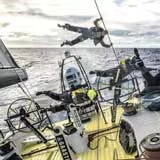
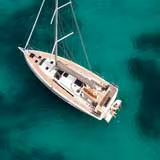
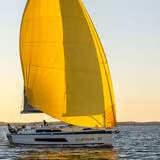
A mast is a tall vertical spar erected along the vessel's centerline to support sails, rigging, and equipment. Modern sailing yachts typically utilize extruded aluminum profiles or carbon fiber masts. It is essential to distinguish a sailing mast from land-based utility towers or horizontal spars like the boom. As noted in historical references from Wikipedia, until the mid-19th century all masts were crafted from timber, with larger ships using multi-section built masts to achieve necessary height and structural strength.
The main purpose of the mast is to carry the mainsail and headsails while withstanding severe dynamic forces. Standing rigging (forestay, backstay, and shrouds) holds the mast stable, while spreaders optimize guy angles. Key measurements include mast height above the waterline (air draft, measured in meters or feet), mast rake (angle of tilt in degrees), and cross-sectional wall thickness (in millimeters). Proper mast tuning heavily impacts vessel balance during essential sailing maneuvers like tacking and gybing. Additionally, halyards run inside or along the mast profile, requiring precise yacht rope handling to hoist and adjust sails safely. Masts also serve as elevated platforms for radar domes, VHF antennas, and navigation lights.
Quick answers
What is Mast?
A tall vertical spar or extruded profile erected along the centerline of a vessel to support sails, standing rigging, and navigational hardware.
What is Mast used for on a yacht?
Measured by air draft (height above waterline) and rake angle. Distinguish from horizontal spars (booms) or non-marine structural poles.
What topics are related to Mast?
Sail Handling & Trim, Boom, Boom vang (Kicking strap), Genoa sail
Sources and verification
- Navi.training: GPS, AIS та радар. - «Три ока» вашої яхти – чи знаєте ви різницю?
- Navi.training: Работа с веревками на яхте: лебедки и блоки для чайников
- Navi.training: Робота з мотузками на яхті: лебідки та блоки для початківців
- Navi.training: Основні вітрильні маневри для новачків: оверштаг та фордевінд простими словами
- Navi.training: Yacht Rope Handling: Winches and Blocks for Beginners
- Navi.training: Essential Sailing Maneuvers for Beginners: Tacking and Gybing in Simple Terms
- Wikipedia: Mast (sailing) · CC BY-SA 4.0 / GFDL

 22 min to read