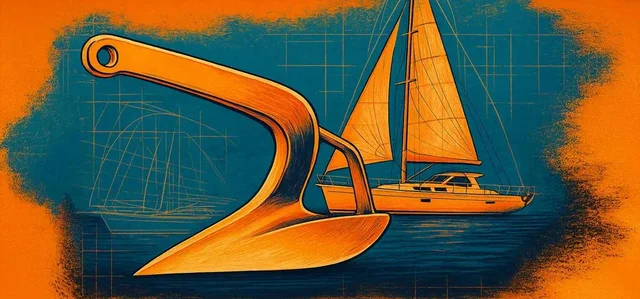
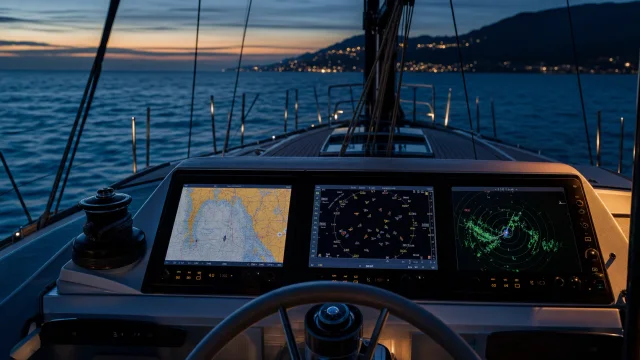
Anchor scope is a fundamental concept in anchoring that determines holding power. According to Wikipedia, an anchor is a device used to secure a vessel to the bed of a body of water. However, even the best anchor will not hold if the scope is insufficient. Scope is the ratio of the length of anchor rode deployed (L) to the vertical distance from the bow roller to the seabed. That distance is the sum of water depth (D) and the height of the bow roller above the waterline (H): Scope = L / (D + H). For example, in 5 m of water with a bow roller 1 m above the surface, a 5:1 scope requires 30 m of rode (5+1=6, 6×5=30). Recommended minimum scopes: for a lunch stop in calm conditions with all-chain rode, 4:1; overnight in settled weather, 5:1; when wind exceeds 20 knots, 7:1; in storm conditions, 10:1 or more. If using a combination rode (chain and rope), increase scope to at least 7:1 even in light airs, because rope lacks the catenary weight of chain and absorbs shock less effectively. Do not confuse scope with the total length of rode: scope is a ratio, not an absolute length. In general English, “scope” can mean extent or range, but in nautical use it specifically refers to this anchoring ratio. Insufficient scope is a leading cause of anchor dragging. Always calculate scope based on the maximum expected depth (including tidal rise) and ensure you have enough rode on board with a small reserve. For more on anchor selection and setting technique, see Types of Anchors on a Modern Sailing Yacht. Brush up on basic terminology with Yachting Terminology for Dummies. For a deeper dive into all aspects of anchoring, visit the Anchoring tag.
Quick answers
What is Anchor scope?
The ratio of the length of anchor rode (chain and/or rope) paid out to the vertical distance from the bow roller to the seabed.
What is Anchor scope used for on a yacht?
Before anchoring, always calculate scope using the maximum expected depth (including tide) and bow roller height. For all-chain rode in calm weather, 5:1 is sufficient; increase to 7:1 when wind exceeds 15 knots. For rope/chain rodes, use a minimum of 7:1.
What topics are related to Anchor scope?
Sources and verification
- Navi.training: Яхтенный этикет: правила хорошего тона для гостей и экипажа
- Navi.training: Виды якорей на современной парусной яхте
- Navi.training: Яхтенная терминология для чайников, 77 слов которые нужно знать перед путешествием на яхте.
- Navi.training: Яхтовий етикет: правила хорошого тону для гостей та екіпажу
- Navi.training: Види якорів на сучасній вітрильній яхті
- Navi.training: Яхтова термінологія для чайників, 77 слів які потрібно знати перед подорожжю на яхті.
- Navi.training: Yacht Etiquette: Rules of Good Manners for Guests and Crew
- Navi.training: What is a Yacht Marina? Port vs Marina for Yachts Explained
- Navi.training: Yachting terminology for Dummies, 77 words you need to know before traveling on a yacht.
- Wikipedia: Anchor · CC BY-SA 4.0 / GFDL

 22 min to read