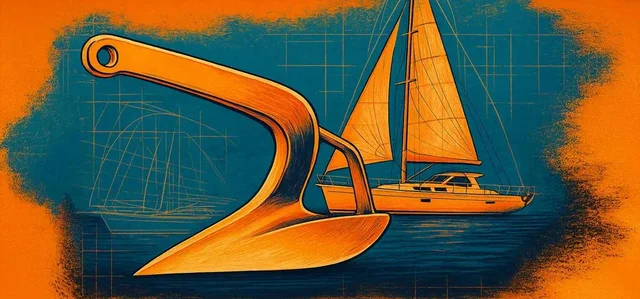
An anchor is an essential device used to restrict the movement of a vessel on the water. In modern yachting, anchors fall into two main functional categories: seabed anchors and sea anchors (drift anchors). Traditional seabed anchors hold a boat by digging into the bottom substrate, aided by the weight and scope of the anchor chain. For safe riding at anchor, a scope ratio between 3:1 (in calm conditions with full chain) and 5:1 or 7:1 (in strong winds or with rope rode) relative to water depth is standard practice.
As described in Wikipedia, a sea anchor operates through hydrodynamic drag rather than seabed contact. Deployed from the bow, this parachute-like fabric device stabilizes the vessel during heavy weather in deep water, keeping the bow turned into the wind and waves to prevent broadside capping or overwhelm. It differs fundamentally from a stern drogue, which is streamed from the aft to slow progress in overtaking seas.
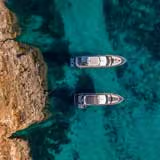
Choosing the correct equipment and respecting safe distances in crowded anchorages are core elements of proper seamanship. Following proper yacht etiquette ensures fair swing room for all vessels in a bay. When choosing between staying in an anchorage or seeking shelter, skippers should understand how options differ, particularly when evaluating a yacht marina versus open anchoring.
Quick answers
What is Anchor?
A heavy device dropped to the seabed or streamed in open water to hold a vessel in place by mechanical grip or hydrodynamic drag.
What is Anchor used for on a yacht?
Always calculate required rode length based on total depth from bow roller to seabed, including high tide variations.
What topics are related to Anchor?
Sources and verification
- Navi.training: Виды якорей на современной парусной яхте
- Navi.training: Яхтенный этикет: правила хорошего тона для гостей и экипажа
- Navi.training: Види якорів на сучасній вітрильній яхті
- Navi.training: Яхтовий етикет: правила хорошого тону для гостей та екіпажу
- Navi.training: Yacht Etiquette: Rules of Good Manners for Guests and Crew
- Navi.training: What is a Yacht Marina? Port vs Marina for Yachts Explained
- Wikipedia: Sea anchor · CC BY-SA 4.0 / GFDL

 22 min to read