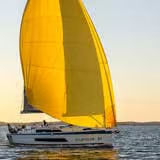
In nautical terminology, **windward** refers to the direction from which the wind originates, or the side of a vessel directly exposed to the oncoming breeze. It is the exact opposite of leeward, which is the sheltered side facing away from the wind. Distinguishing the windward side is critical for sail trim, crew weight placement (hiking to counteract heel), and determining right-of-way under collision avoidance regulations.
According to Wikipedia's reference on sailing maneuvers, sailing vessels cannot sail directly into the wind and must execute a series of tacks to make progress toward a windward destination. When a sailboat tacks, its bow turns through the wind so that the windward side switches from one edge of the hull to the other. Mastering these essential sailing maneuvers is fundamental for navigating toward any upwind target.
In maritime navigation and COLREG Rule 12, when two sailing vessels receive the wind on the same side, the vessel positioned to windward must keep out of the way of the leeward vessel. Hydrodynamic forces created by types of sailboat keels generate the necessary lift to resist leeway—the lateral drift pushed downwind—allowing modern yachts to track efficiently upwind at angles typically between 35° and 45° off the true wind direction.
Note that windward as a nautical directional orientation should not be confused with geographical proper nouns like the Windward Islands. On board, the windward side constantly changes whenever the boat alters course relative to the wind vector.
Quick answers
What is Windward?
The direction from which the wind is blowing, or the side of a vessel facing into the wind.
What is Windward used for on a yacht?
Used in commands like 'move to the windward rail' and in COLREG Rule 12 to determine right-of-way between sailing vessels.
What topics are related to Windward?
Sources and verification
- Navi.training: Виды килей парусной яхты - как разобраться?
- Navi.training: GPS, AIS та радар. - «Три ока» вашої яхти – чи знаєте ви різницю?
- Navi.training: Види кілів вітрильної яхти - як розібратися?
- Navi.training: Як працює GPS та роль електронної навігації у світі яхтингу
- Navi.training: Essential Sailing Maneuvers for Beginners: Tacking and Gybing in Simple Terms
- Navi.training: Types of Sailboat Keels: How to Choose the Right One?
- Wikipedia: Tacking (sailing) · CC BY-SA 4.0 / GFDL

 14 min to read