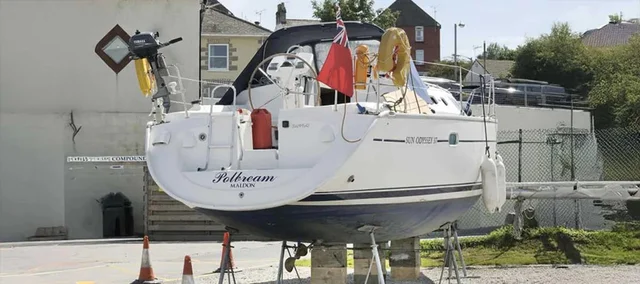
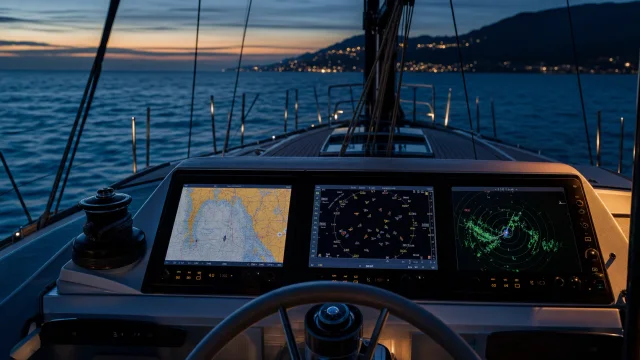
Beam, often referred to simply as width, is a fundamental yacht measurement. As noted in Wikipedia’s list of large sailing vessels, beam denotes the width of the hull. It is measured in meters or feet at the design waterline and does not include rub rails, folding keels, or other protruding elements. A wider beam increases initial stability and allows for more spacious interior layouts, which is why modern cruising yachts tend to have generous beams. However, extreme width can increase drag and reduce upwind performance, and it may lead to a quicker, more jerky motion in a seaway. The connection between beam and handling is particularly noticeable on yachts with twin helms — we explore this in detail in our article «Why are there two helms on a yacht?». Designers always consider beam relative to waterline length; a classic racing yacht might have an L/B ratio around 3:1, while a modern cruising catamaran can be significantly wider. In everyday sailing, knowing your beam is essential for negotiating locks, booking marina berths, and calculating sail areas. For a broader look at how beam interacts with other design elements, visit the «yacht design» topic.
Quick answers
What is beam (width)?
The maximum width of a vessel’s hull, measured at the widest point excluding appendages.
What is beam (width) used for on a yacht?
Do not confuse with a structural beam (a transverse support member) or with a light beam. When used as a measurement, ‘beam’ always refers to the width of the hull. The abbreviation B is often used in formulas alongside L (length) and D (draft).
What topics are related to beam (width)?
Sources and verification
- Navi.training: 7 лучших подарков для яхтсмена в 2025 году
- Navi.training: 150 миль без киля: Неожиданное приключение яхты Polbream
- Navi.training: Зачем на яхте два штурвала? Подробный гид для новичков
- Navi.training: 7 найкращих подарунків для яхтсмена у 2025 році
- Navi.training: 150 миль без кіля: Несподівана пригода яхти Polbream
- Navi.training: Навіщо на яхті два штурвали? Докладний гід для новачків
- Navi.training: The 7 best gifts for the yachtsman in 2025
- Navi.training: 150 miles without a keel: Polbream's unexpected adventure
- Navi.training: Why are there two helms on a yacht? A detailed guide for beginners
- Wikipedia: List of large sailing vessels · CC BY-SA 4.0 / GFDL
 7 min to read