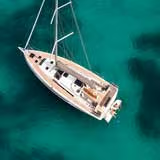
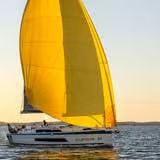
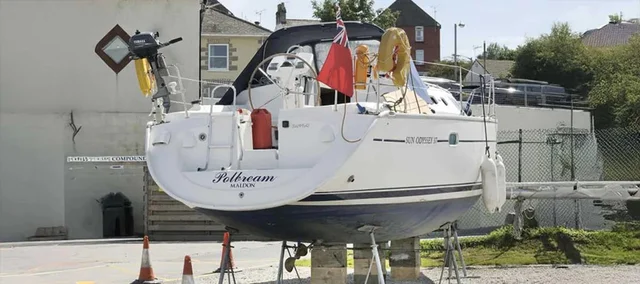
On a sailing yacht, ballast is the weight placed low in the hull to provide a righting moment that resists heeling, as defined by Wikipedia. In most cruising monohulls, fixed ballast is integrated into the keel and cast from lead or iron, accounting for 30 to 45 percent of the vessel's displacement. The ballast ratio (ballast weight divided by displacement) directly affects seaworthiness: a higher ratio reduces heel and improves safety in strong winds. Some yachts supplement fixed ballast with water ballast tanks that can be filled with seawater, allowing the crew to increase stability on demand without a permanent increase in draft—a feature sometimes found in racing or long-distance cruising designs. It is important to distinguish this from the ballast water used on cargo ships, which involves massive tanks. On a sailboat, insufficient ballast can cause excessive heeling, loss of rudder control, and even a knockdown. When choosing between a monohull and a catamaran, the role of ballast is a decisive factor; learn more in our catamaran or monohull guide. The accident of the yacht Polbream, which sailed 150 miles without its keel, vividly illustrates that ballast is not a luxury but a fundamental safety element.
Quick answers
What is Ballast?
In yachting: weight placed low in a vessel, often in the keel, to lower the centre of gravity and increase stability. It can be fixed (lead, iron) or water ballast in tanks.
What is Ballast used for on a yacht?
For cruising yachts, the ballast ratio typically ranges from 30% to 45%. Excessive heel indicates insufficient ballast or poor weight distribution.
What topics are related to Ballast?
Sources and verification
- Navi.training: 7 лучших подарков для яхтсмена в 2025 году
- Navi.training: 150 миль без киля: Неожиданное приключение яхты Polbream
- Navi.training: Зачем на яхте два штурвала? Подробный гид для новичков
- Navi.training: 7 найкращих подарунків для яхтсмена у 2025 році
- Navi.training: 150 миль без кіля: Несподівана пригода яхти Polbream
- Navi.training: Навіщо на яхті два штурвали? Докладний гід для новачків
- Navi.training: 150 miles without a keel: Polbream's unexpected adventure
- Navi.training: Catamaran or monohull: which to choose for your next trip?
- Navi.training: The 7 best gifts for the yachtsman in 2025
- Wikipedia: Ship ballast · CC BY-SA 4.0 / GFDL
 6 min to read