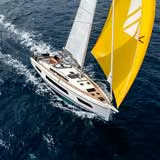
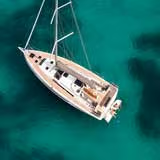
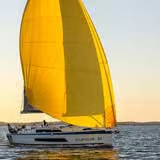
The bow is the forwardmost part of a vessel's hull, located opposite the stern. In nautical terminology, the term explicitly refers to the front bow section and stem, distinguishing it from English homonyms such as an archery bow, a knot, a violin bow, or the act of bowing.
The shape of the bow fundamentally dictates a yacht's hydrodynamic resistance, entry angle into waves, and reserve buoyancy. Common architectural variations include traditional spoon bows, plumb bows (vertical stem), and inverted bows. A plumb bow maximizes the waterline length (LWL) relative to the length overall (LOA). For instance, on a 37-foot (11.3-meter) yacht, a longer waterline improves maximum hull speed while keeping displacement optimized.
According to Wikipedia, the bow plays a central role during tacking maneuvers, where the vessel turns its bow through the wind to change tacks when beating to windward. When reviewing different types of sailing yachts, naval architects balance bow sharpness for wave slicing against flared upper sections to prevent pitch-poling and bow burying in heavy seas.
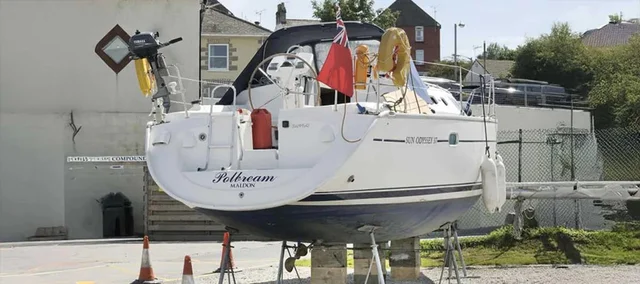
On modern cruising boats, a bow thruster is commonly installed in a transverse tunnel near the stem to assist with slow-speed docking. Proper bow deck hardware includes sturdy cleats, fairleads, and an anchor roller system. Even during catastrophic structural emergencies, such as severe keel-related incidents, adequate reserve buoyancy in the forward hull sections remains vital for maintaining stability and seaworthiness.
Quick answers
What is Bow?
The forwardmost part of a ship or yacht's hull, designed to slice through water and provide reserve buoyancy.
What is Bow used for on a yacht?
Always keep the bow clear of clutter during anchor dropping or docking operations to avoid tripping hazard on the foredeck.
What topics are related to Bow?
Sources and verification
- Navi.training: GPS, AIS та радар. - «Три ока» вашої яхти – чи знаєте ви різницю?
- Navi.training: Виды парусных яхт – Разновидности и отличия, классификация яхт
- Navi.training: Вибір парусної яхти - Різновиди та відмінності, класифікація яхт
- Navi.training: 150 миль без кіля: Несподівана пригода яхти Polbream
- Navi.training: 150 miles without a keel: Polbream's unexpected adventure
- Navi.training: Types of Sailing Yachts: Classification, Varieties, and Tips for Choosing the Perfect Boat
- Wikipedia: Tacking (sailing) · CC BY-SA 4.0 / GFDL
 6 min to read