As published by the International Maritime Organization (IMO), the International Regulations for Preventing Collisions at Sea (COLREGs 1972) dictate the essential "rules of the road" for all vessels navigating high seas and connected navigable waters.
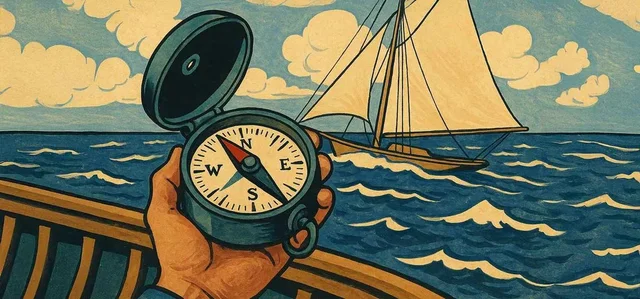
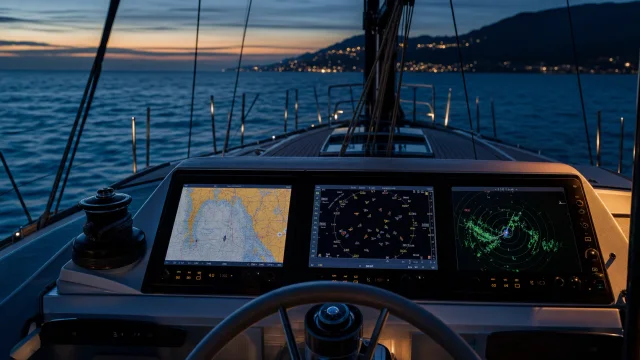
Rule 5 dictates that every vessel must maintain a proper lookout at all times using sight, hearing, and all available electronic means. According to Rule 6, vessels must always maintain a safe speed to allow effective collision-avoidance action. Skippers determine risk of collision by monitoring the compass bearing of an approaching vessel; taking frequent bearings with a marine compass is critical because if the bearing remains constant, a collision risk exists.
COLREGs divide interacting vessels into the give-way vessel (required to take early, substantial action to stay clear) and the stand-on vessel (required to maintain course and speed). Sailing rules specify that a vessel on a port tack yields to a vessel on a starboard tack, and a windward vessel yields to a leeward vessel on the same tack. Ignoring these procedures can result in disastrous accidents, as shown by documented offshore collisions.
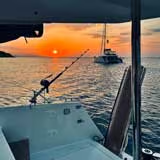
Specific light sectors are legally defined: port and starboard sidelights shine across a 112.5° arc from dead ahead to 22.5° abaft the beam, while the stern light covers 135°. Mastery of COLREGs is mandatory for safe skipper performance.
Quick answers
What is COLREGs?
The International Regulations for Preventing Collisions at Sea (COLREGs) are the global IMO-mandated rules establishing navigation standards, right-of-way, and signaling for vessels at sea.
What is COLREGs used for on a yacht?
Applied universally to dictate stand-on vs give-way roles, sailing priorities, and night signal lights recognition.
What topics are related to COLREGs?
COLREGs, EPIRB (Emergency Position Indicating Radio Beacon), Heave-to, Life jacket
Sources and verification
- Navi.training: GPS, AIS та радар. - «Три ока» вашої яхти – чи знаєте ви різницю?
- Navi.training: Трагедия в открытом море: Youtube-блогеры La Vagabonde пережили серьезное столкновение у берегов Японии
- Navi.training: Трагедія у відкритому морі: Youtube-блогери La Vagabonde пережили серйозне зіткнення біля берегів Японії
- Navi.training: Види якорів на сучасній вітрильній яхті
- Navi.training: Tragedy on the high seas: Youtube bloggers La Vagabonde survived a serious collision off the coast of Japan
- Navi.training: The Compass on a Sailboat: How to Use a Marine Compass and Why Sailors Need It
- Wikipedia: International Regulations for Preventing Collisions at Sea · CC BY-SA 4.0 / GFDL

 3 min to read