An Emergency Position Indicating Radio Beacon (EPIRB) is a core safety component of the Global Maritime Distress and Safety System (GMDSS). Unlike a Personal Locator Beacon (PLB), which is registered to an individual, an EPIRB is officially coded to a specific vessel using its Maritime Mobile Service Identity (MMSI) or serial number.
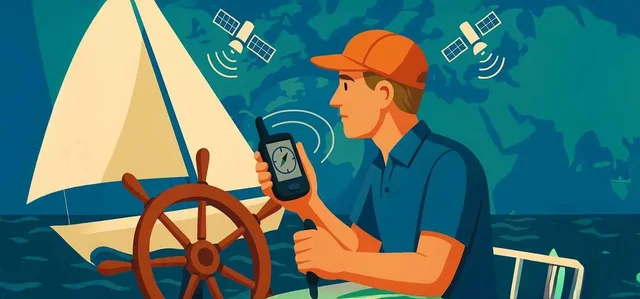
Upon deployment, the beacon transmits a 406 MHz distress alert to Cospas-Sarsat satellites alongside a low-power 121.5 MHz homing signal for local search vessels. Understanding how GPS works demonstrates how GNSS-enabled EPIRBs shrink the search radius from 5 kilometers (2.7 nautical miles) down to within 100 meters (328 feet).
EPIRBs fall into two operational categories. Category 1 utilizes a Hydrostatic Release Unit (HRU) that automatically frees and activates the beacon when submerged to a depth between 1.5 and 4 meters (4.9 to 13.1 feet). Category 2 requires manual release. International standards specify a minimum battery operating life of 48 hours at -20°C (-4°F). When sourcing safety yacht equipment, skippers must rigorously monitor HRU expiration dates (typically 2 years) and battery service intervals (5–10 years). The swift loss of vessels like the superyacht Bayesian emphasizes the life-saving role of accessible distress beacons during sudden sinkings.
Quick answers
What is EPIRB (Emergency Position Indicating Radio Beacon)?
An EPIRB is a vessel-registered emergency transmitter designed to broadcast distress signals on 406 MHz to rescue authorities via the Cospas-Sarsat satellite system.
What is EPIRB (Emergency Position Indicating Radio Beacon) used for on a yacht?
Differentiate EPIRB (vessel-bound beacon) from individual PLBs or aviation ELTs. Never mount Category 1 float-free brackets under overhangs or biminis that block ascent.
What topics are related to EPIRB (Emergency Position Indicating Radio Beacon)?
Sources and verification
- Navi.training: GPS, AIS та радар. - «Три ока» вашої яхти – чи знаєте ви різницю?
- Navi.training: Что подарить яхтсмену? - 25 идей яхтенных подарков.
- Navi.training: Що подарувати яхтсмену? - 25 ідей яхтових подарунків.
- Navi.training: Як працює GPS та роль електронної навігації у світі яхтингу
- Navi.training: What to buy for a sailor? - 25 yachting gift ideas.
- Navi.training: How GPS Works and the Role of Electronic Navigation in the World of Sailing
- Wikipedia: Bayesian (yacht) · CC BY-SA 4.0 / GFDL
 21 min to read