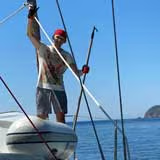
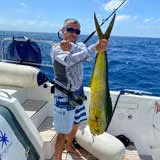
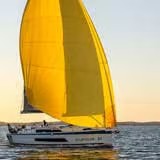
As defined in Wikipedia, heaving to is a method of slowing a sailing vessel's forward progress and locking the helm and sails so that constant steering is not required. Executed by tacking without backing the jib (leaving it backed to windward), easing the mainsail, and locking the helm hard to windward, the technique balances opposing aerodynamic forces. The backed jib pushes the bow away from the wind, while the turned rudder forces it back up, causing the yacht to settle into a stable drift at a speed of 1 to 2 knots at an angle of roughly 45° to 60° to the true wind.
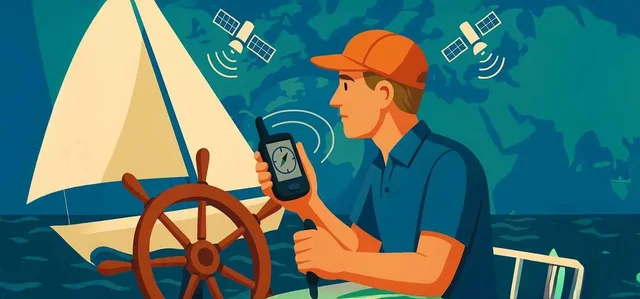
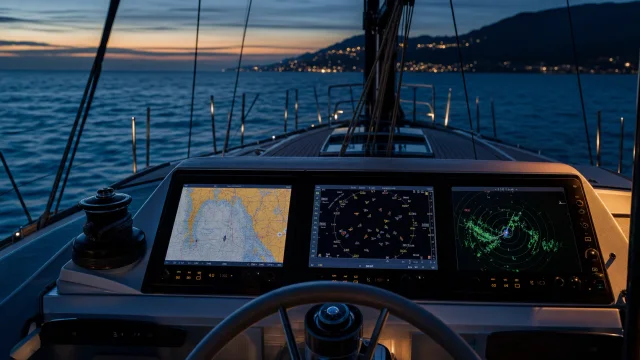
A key hydrodynamic benefit is the creation of a smooth wake or slick to windward, which breaks the energy of cresting seas before they strike the hull. This makes heaving to an indispensable storm strategy and a practical rest tactic for singlehanded or shorthanded crews needing to take a meal, attend to gear, or reef sails. Modern navigation tools help monitor this drift movement; learn more about tracking position in our article on how GPS works in sailing. Under COLREGs, a vessel hove to remains on its active tack (preferably starboard tack to retain stand-on status), distinguishing it from a power-driven vessel ordered to stop by law enforcement or a unrigged vessel lying to.
Quick answers
What is Heave-to?
A seamanship maneuver where sails and rudder are set in opposition to bring a sailing vessel to a relative stop and controlled drift.
What is Heave-to used for on a yacht?
Essential heavy-weather tactic and short-handed sailing maneuver. Prefer starboard tack when hove to under COLREGs.
What topics are related to Heave-to?
Sources and verification
- Navi.training: GPS, AIS та радар. - «Три ока» вашої яхти – чи знаєте ви різницю?
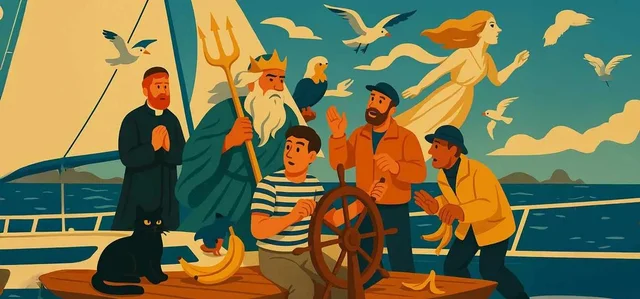
- Navi.training: Морские суеверия: от Нептуна до запрета на бананы на борту
- Navi.training: Морські забобони: від Нептуна до заборони бананів на борту
- Navi.training: Як працює GPS та роль електронної навігації у світі яхтингу
- Navi.training: Sailing Superstitions: From Neptune to the Ban on Bananas On Board
- Navi.training: How GPS Works and the Role of Electronic Navigation in the World of Sailing
- Wikipedia: Heaving to · CC BY-SA 4.0 / GFDL
 32 min to read