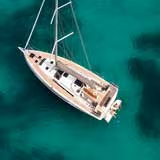
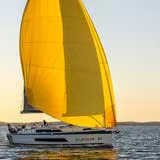
Displacement is the total weight of the volume of water displaced by a vessel's hull, which, according to Archimedes' principle, strictly equals the actual total mass of the yacht. It is important to distinguish displacement from Gross Tonnage (GT); while gross tonnage measures internal enclosed volume, displacement measures physical mass in metric tons (t) or kilograms (kg). Volumetric displacement is expressed in cubic meters (m³), related to mass displacement by water density (approximately 1.025 t/m³ in seawater and 1.000 t/m³ in fresh water).
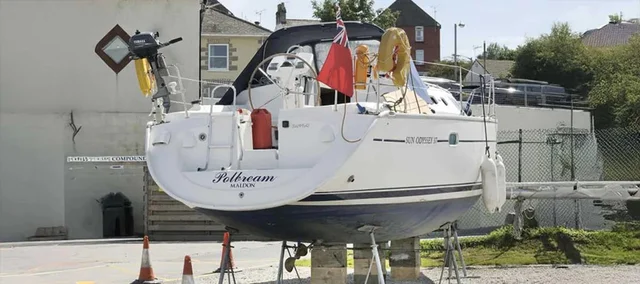
In naval architecture, a clear distinction is drawn between light displacement (unloaded hull, ballast keel, and machinery) and fully loaded displacement, which includes crew, fuel, fresh water, and provisions. A substantial portion of a monohull's displacement consists of its ballast keel. As illustrated in the dramatic story of the yacht Polbream, losing underwater weight drastically alters draft, freeboard, and righting moment.
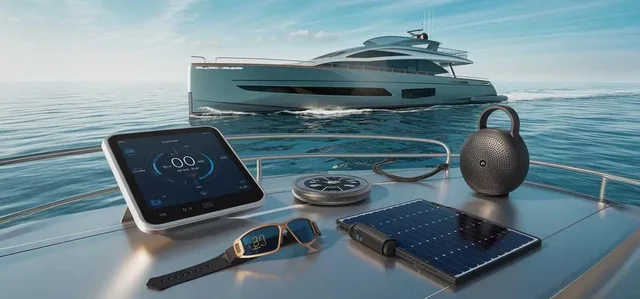
According to Wikipedia's reference on large sailing vessels, displacement figures vary depending on load standards and conditions. For a skipper, understanding displacement is crucial when stowing heavy gear, selecting gifts and essential equipment, and calculating draft before navigating shallow waters.
Quick answers
What is Displacement?
Displacement is the weight or volume of water displaced by a floating vessel, equal to the total mass of the yacht according to Archimedes' principle.
What is Displacement used for on a yacht?
Do not confuse weight displacement (in tons) with gross tonnage (a volumetric measure). Moving from seawater to freshwater increases a yacht's draft due to lower fluid density.
What topics are related to Displacement?
Sources and verification
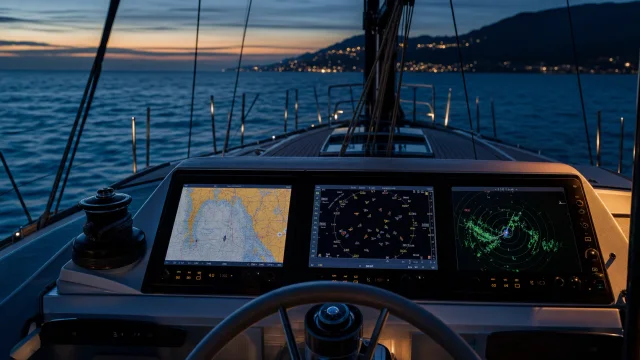
- Navi.training: GPS, AIS та радар. - «Три ока» вашої яхти – чи знаєте ви різницю?
- Navi.training: 150 миль без киля: Неожиданное приключение яхты Polbream
- Navi.training: 150 миль без кіля: Несподівана пригода яхти Polbream
- Navi.training: 7 найкращих подарунків для яхтсмена у 2025 році
- Navi.training: 150 miles without a keel: Polbream's unexpected adventure
- Navi.training: The 7 best gifts for the yachtsman in 2025
- Wikipedia: List of large sailing vessels · CC BY-SA 4.0 / GFDL
 6 min to read