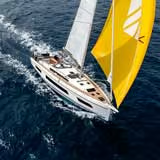
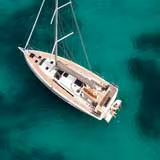
In ship construction, according to Wikipedia, the keel is the bottom-most longitudinal structural element of a watercraft, traditionally serving as the primary backbone of the hull. In modern sailing yacht design, a clear distinction must be drawn between this internal structural keel and the external fin keel (or ballast keel). While the backbone is integrated into the hull structure, the ballast keel is an external hydrodynamic appendage bolted to the underside of the vessel.
The keel serves two primary practical functions: generating hydrodynamic lift to counteract lateral drift (leeway) when sailing close-hauled and creating a righting moment to resist heeling forces exerted by the wind. Ballast—typically cast iron or lead—is concentrated inside the fin or lower bulb. On standard cruising yachts, ballast comprises 30% to 45% of total vessel displacement, providing positive stability at significant heel angles. Modern keel drafts typically range from 1.5 meters for shallow-draft wing designs to over 2.5 meters for high-performance deep fins.
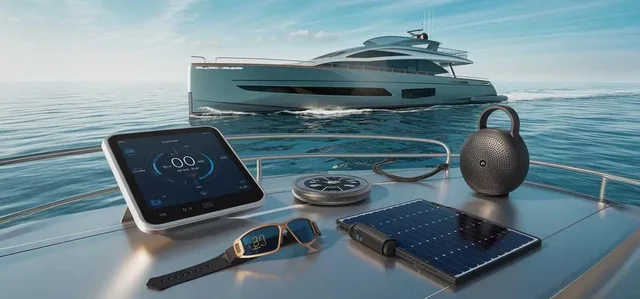
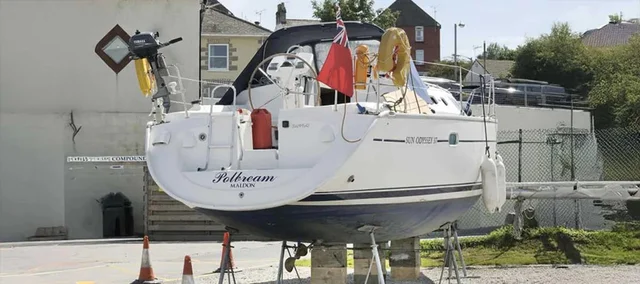
A failure or loss of the ballast keel severely compromises stability and leads to an immediate capsize risk under sail, as highlighted in the infamous Polbream incident. Homonymically, the nautical keel must be distinguished from the anatomical keel (sternum ridge) in birds or the historical English unit of coal weight (approx. 21.2 metric tons). Maintaining keel integrity requires regular inspection of keel bolts and structural floor grids, especially after accidental groundings. For captains managing safety systems onboard, finding practical tools and gear can be explored in our guide to top gifts for yachtsmen.
Quick answers
What is Keel?
The central longitudinal structural element at the bottom of a hull, or a weighted underwater fin that provides stability and resists lateral leeway on modern sailing vessels.
What is Keel used for on a yacht?
Inspect the bilge area around keel washers after grounding to verify there is no delamination or water ingress.
What topics are related to Keel?
Sources and verification
- Navi.training: GPS, AIS та радар. - «Три ока» вашої яхти – чи знаєте ви різницю?
- Navi.training: 150 миль без киля: Неожиданное приключение яхты Polbream
- Navi.training: 150 миль без кіля: Несподівана пригода яхти Polbream
- Navi.training: 7 найкращих подарунків для яхтсмена у 2025 році
- Navi.training: 150 miles without a keel: Polbream's unexpected adventure
- Navi.training: The 7 best gifts for the yachtsman in 2025
- Wikipedia: Keel · CC BY-SA 4.0 / GFDL
 6 min to read