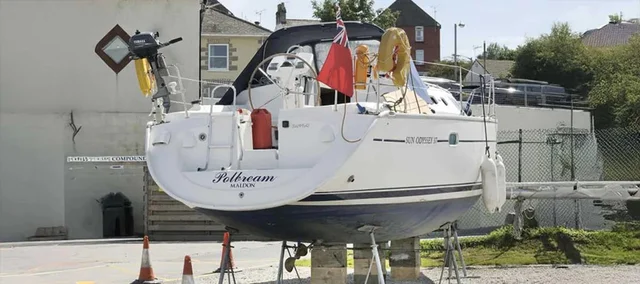
In naval architecture, a transom is the flat or gently curved transverse structural surface that forms the stern of many boats and ships. It closes the aft end of the hull and serves as a critical attachment point for rudders, outboard motors, sterndrives, or backstays on sailing yachts. According to Wikipedia, the stern is the back portion of a vessel; the transom is a specific stern configuration that evolved from square sterns to elliptical and modern forms. Transom angles vary: a vertical transom is perpendicular to the waterline; a raked transom slopes aft; a reverse-raked transom slopes forward. On small powerboats, the transom must bear engine thrust and dynamic loads; a typical fiberglass transom thickness is 1.5–2 inches (38–50 mm), often reinforced with a plywood core. For sailing yachts, an open transom design—with steps or a cutout—enhances water drainage and allows easy boarding from a dinghy or dock. The term 'transom' should not be confused with its architectural meaning (a horizontal beam over a door or a window above it) or with the transom of an automobile. For insights into how steering stations are arranged near the transom on modern yachts, read why are there two helms on a yacht. To delve deeper into the structural design of yachts, visit our yacht design topic page.
Quick answers
What is Transom?
Transom — the flat or curved transverse surface forming the stern of a vessel, used for mounting engines, rudders, and other equipment.
What is Transom used for on a yacht?
Used in naval architecture; not to be confused with architectural transom.
What topics are related to Transom?
Sources and verification
- Navi.training: 7 лучших подарков для яхтсмена в 2025 году
- Navi.training: 150 миль без киля: Неожиданное приключение яхты Polbream
- Navi.training: Зачем на яхте два штурвала? Подробный гид для новичков
- Navi.training: 7 найкращих подарунків для яхтсмена у 2025 році
- Navi.training: 150 миль без кіля: Несподівана пригода яхти Polbream
- Navi.training: Навіщо на яхті два штурвали? Докладний гід для новачків
- Navi.training: The 7 best gifts for the yachtsman in 2025
- Navi.training: 150 miles without a keel: Polbream's unexpected adventure
- Navi.training: Why are there two helms on a yacht? A detailed guide for beginners
- Wikipedia: Stern · CC BY-SA 4.0 / GFDL

 7 min to read